




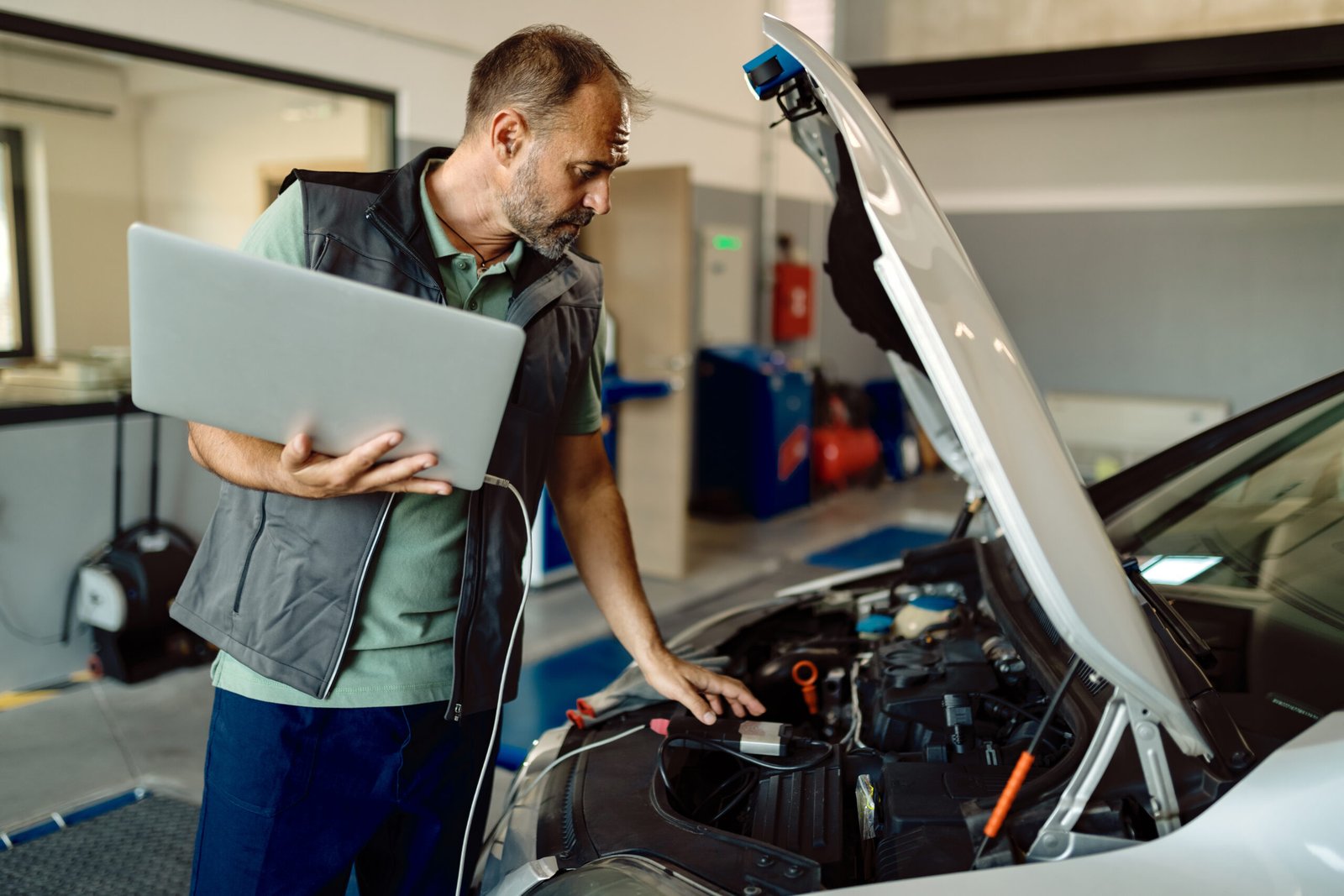
A heavy-duty diesel commercial vehicle may be required to undergo an emissions test in Ontario. This is due to the requirements of the province’s DriveON emissions testing program. Requirements for when a heavy-duty diesel commercial vehicle must have an emissions test are based upon several factors including: 1) fuel type used by the vehicle; 2) the registered gross weight (RGW) of the vehicle; 3) the model year of the vehicle; and 4) how the vehicle was registered.
All commercial vehicle owners, truck operators, fleet managers, and other individuals or organizations who manage vehicles in their daily business activities need to be aware of the rules governing commercial vehicle registration in order to prevent delays when applying for license plates and ensure compliance with all applicable Ontario laws.
There isn’t always a need for every type of commercial vehicle (truck, bus, etc.) to have an emissions inspection. Many types of vehicles that fall under this program require inspections based on three criteria: 1) the vehicle is powered by diesel fuel; 2) the registered gross weight is over 4,500 kg; 3) the age of the vehicle meets the requirements of the program.
Which Commercial Vehicles Require an Emissions Test in Ontario?
The province of Ontario requires emission testing on heavy-duty diesel commercial motor vehicles that qualify as such and are registered in the province.
A vehicle generally needs an emissions test when it meets these conditions:
- The vehicle is a commercial diesel engine, which can include qualifying large trucks or buses.
- Its registered gross weight is more than 4,500 kg.
- It is at least seven model years old when renewing its licence plate.
- It is older than the current model year when being registered under a new owner.
For instance, if you have a commercial diesel truck that has a registered maximum weight of 8,000 kilograms, you will be required to get an emissions inspection done on that vehicle once it is old enough to require registration renewal.
If a diesel powered commercial vehicle has been operated out-of-province and will now be registered in Ontario, and is at least one model year behind the present model year, then that vehicle may require a current emissions inspection.
The vehicle registration renewal notification may provide information about whether or not your car needs to be inspected for emissions.
What Types of Commercial Vehicles May Need Testing?
The Ontario emission test program can apply to many different types of heavy duty diesel trucks if they meet the required weights and ages.
Heavy-Duty Diesel Trucks
Large diesel trucks used to haul freight, equipment, and commercial cargo may need to be tested for emissions.
Examples include:
- Heavy-duty transport trucks
- Truck tractors
- Straight trucks
- Dump trucks
- Cube vans
- Commercial delivery trucks
- Heavy-duty pickup trucks
The commercial classification of a vehicle, the registered gross weight, the fuel type and the model year all contribute to determining if testing will be necessary.
Commercial Buses
Some types of diesel buses that have a gross weight rating over 4,500 kg can require an emissions test.
This can include qualifying vehicles used for:
- Passenger transportation
- Commercial transportation services
- School transportation
- Charter and group travel
Bus operators need to look at the vehicle’s registration information and what type of inspections are required for that particular vehicle instead of just thinking that all buses follow the exact same guidelines.
Commercial Diesel Vans
Large diesel-powered vans that are utilized for business or travel can qualify for the program when their registered gross weight is over 4,500 kg and the applicable age requirement is met.
A small delivery truck or light commercial use vehicle won’t need to be tested for its emissions solely due to being utilized for business.
Other Heavy-Duty Diesel Commercial Vehicles
Other business vehicles can potentially be protected based on how they are registered and what type of vehicle classification they have.
Commercial vehicle owners who operate specialized vehicles must check if they are eligible for the program at either an authorized DriveON inspection center or by contacting the appropriate provincial authority.
Understanding the 4,500 kg Registered Gross Weight Requirement
The amount of registered gross weight is probably one of the biggest determinants in if a commercial diesel engine vehicle will require an emissions test.
RGW stands for the greatest amount of weight allowed for a vehicle depending on the license plate fee that has been paid. This number will be displayed on your vehicle ownership permit next to the area marked “Registered Gross Weight.”
For the purposes of the emissions testing program, the vehicle’s RGW (Registered Gross Weight) must be over 4,500 kg.
Here is a simple comparison:
| Registered gross weight | Emissions testing eligibility |
| 3,500 kg | Does not meet the weight threshold |
| 4,500 kg | Does not meet the weight threshold |
| 5,000 kg | Meets the weight threshold |
| 7,500 kg | Meets the weight threshold |
| 10,000 kg | Meets the weight threshold |
The weight condition of the vehicle does not guarantee that it will be subject to a diesel emissions inspection. In addition to meeting the weight condition, the vehicle must meet both the correct diesel fuel type and the correct model year conditions.
How Old Must a Commercial Vehicle Be to Need an Emissions Test?
Another key element regarding vehicle emission test standards in Ontario includes the age of the vehicle.
When renewing a license plate, a commercial diesel vehicle that has been in service for seven model years or longer will require an emissions test.
For an auto being registered by a different person, this will usually apply if that auto is older than the auto manufactured in the present year.
For instance, a qualifying diesel vehicle that is 7 or older model year may require testing at the time of renewal of registration. Similarly, a qualifying older vehicle bought by a new owner may need to be tested for emissions prior to registration.
The owner must be aware of the registration rules for each type of registration, rather than just using the date of manufacture.
Which Commercial Vehicles Are Exempt from Emissions Testing?
The Heavy-Duty Diesel Program does not require all commercial vehicles in Ontario to undergo an emissions test.
The following vehicles generally do not need this particular test:
- Light-duty and passenger vehicles with an RGW of 4,500 kg or less.
- Motorcycles with an RGW of 4,500 kg or less.
- Motorhomes with an RGW of 4,500 kg or less.
- Heavy commercial vehicles with an RGW above 4,500 kg that do not run on diesel.
In other words, if a large truck uses fuel from a gas station instead of diesel, then it is exempt from the heavy duty diesel emissions test.
The exemption from the emissions program will not automatically exempt your vehicle from other requirements. Depending upon what type of commercial vehicle you are driving and how it is used, your vehicle may be required to have a safety inspection either every year or every six months.
What Is the DriveON Commercial Vehicle Emissions Test?
The state of Ontario utilizes a program known as DriveON, which conducts emissions checks on eligible heavy duty diesel commercial vehicles.
Testing has to take place at either a registered DriveON vehicle inspection facility or through an approved DriveON technician.
The emissions inspection may include three main components.
Pre-Test Inspection
The technician conducts an initial visual check of the vehicle prior to conducting the emissions test. Doing so allows the technician to identify potential problems that may impact the inspection process or pose a safety risk.
The technician may check for:
- Excessive visible exhaust smoke.
- Exhaust system leaks.
- Missing or improperly fitted fuel caps.
- Problems with the diesel exhaust fluid tank cap.
- Engine speed governor issues.
- Missing or mismatched vehicle identification numbers.
- Damaged or inaccessible OBD connections, where applicable.
Problems found in the pre-test will require correction prior to starting the actual testing.
Diesel Smoke Opacity Test
An opacity test measures the amount of light that can be seen through the exhaust gas of a vehicle. This test can help determine if your diesel engine produces too much smoke.
Ontario applies different opacity limits based on the vehicle’s model year.
| Vehicle model year | Maximum permitted opacity |
| 1990 and older, excluding school buses | 40% |
| 1990 and older school buses | 30% |
| 1991–2007 | 30% |
| 2008–2010 | 20% |
| 2011 and newer | 10% |
A vehicle will be required to meet the applicable standards for passing the opacity portion of the inspection.
On-Board Diagnostics (OBD) Test
The requirement to run an on-board diagnostic test on some types of commercial diesel vehicles applies as well.
The purpose of this test is to verify that the vehicle’s emission control devices function properly and that there are no emission-related diagnostic fault codes stored in memory.
The applicable OBD rules depend upon the model year of your vehicle and the manufacturer’s gross vehicle weight rating (GVWR). For example, if you own a 2007 or later diesel powered vehicle and its GVWR is less than 6,350 kg, you may be required to have your vehicle tested for OBD compliance.
Under the province’s vehicle inspection regulations, some vehicles will be exempt from certain aspects of OBD testing.
How Often Is a Commercial Vehicle Emissions Test Required?
An emissions test is usually necessary for qualifying diesel-powered commercial vehicles when:
- Renewing the licence plate of a vehicle that is at least seven model years old.
- Registering an eligible older vehicle under a new owner.
- When registering a diesel-powered commercial vehicle in Ontario that was previously registered in another jurisdiction.
A passing emissions inspection report or certificate is valid for 12 months.
Owners should check the expiration date on their registration renewal forms and schedule inspections prior to the expiration date. Fleet operators may also want to keep track of every vehicle’s model year, RGW (Registered Gross Weight), inspection date, and certificate expiration.
What Happens If a Commercial Vehicle Fails the Emissions Test?
If a commercial diesel-powered vehicle is found to be out of compliance with the relevant emission standards, then that vehicle will receive a negative inspection report.
Before you request an additional inspection, you must review the report and make the required repairs.
Common reasons for failure may include:
- Excessive exhaust smoke.
- An emissions-related OBD failure.
- Problems with the vehicle’s emissions-control equipment.
- Issues identified during the pre-test inspection.
After a vehicle has been repaired it may be re-inspected to determine whether it passes the emissions test. It is typically required that the vehicle pass this test prior to being able to renew the registration on the vehicle or transfer ownership.
The certificate indicating that the vehicle has passed its inspection will be in effect for one year; therefore, owners need to retain a duplicate of the certificate as part of their vehicle’s service and inspection records.
Where Can You Get a Commercial Vehicle Emissions Test in Ontario?
Owners of commercial vehicles are required to use either a registered DriveON vehicle inspection facility or a certified DriveON technician to complete their annual emissions inspections.
Prior to making a reservation, make certain the company has authorization to perform heavy-duty diesel commercial vehicle testing. Additionally, inquire regarding appointment availability, documentation needed for testing, fees associated with testing, and if they offer mobile testing services within your region.
Business owners that use multiple trucks/buses should schedule inspections prior to their vehicle’s registration renewal date. Scheduling inspections in advance will minimize the amount of time that a vehicle is out of service (downtime) and will also ensure that the business remains compliant with applicable laws.
Ninth Line Emission offers mobile emissions testing to all qualifying commercial vehicles located within the service area. You can contact our staff to determine if your vehicle needs to be tested and what tests are available to you.
Final Thoughts
Truck owners, bus operators, and fleet managers should know exactly what vehicles require a commercial vehicle emissions test in Ontario so they can properly schedule their vehicle inspection(s) and avoid any issues with registration.
The key elements to examine include the vehicle’s use of diesel fuel, a registered gross weight greater than 4,500 kg, its model year, and its registration status. If the vehicle satisfies all the relevant criteria, schedule a test at an authorized DriveON inspection facility and maintain the passing certificate as part of your service record.
Clean design and very straightforward. No annoying pop-ups or complicated menus, just straight to the action. Love krscbet.
Alright, gotta say, 234betapp is pretty slick. Easy to navigate, place my bets, and check my winnings on the move. Solid app, no complaints here! 234betapp
I’ve seen a lot of sites but this one has a really unique vibe. The rewards are generous and the gameplay is fluid. vnyo88 is where the action is at.
Every session here feels like a refreshing adventure. I love how the slot mechanics are fair and the live chat operator always greets me with a smile. It is rare to find a platform that truly cares about its community. Thanks for keeping it entertaining. idakaislot